
Water
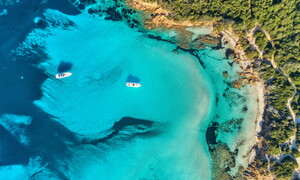
Water covers ¾ of the Earth’s surface; in fact, the Earth seen from space appears to be a “blue planet”
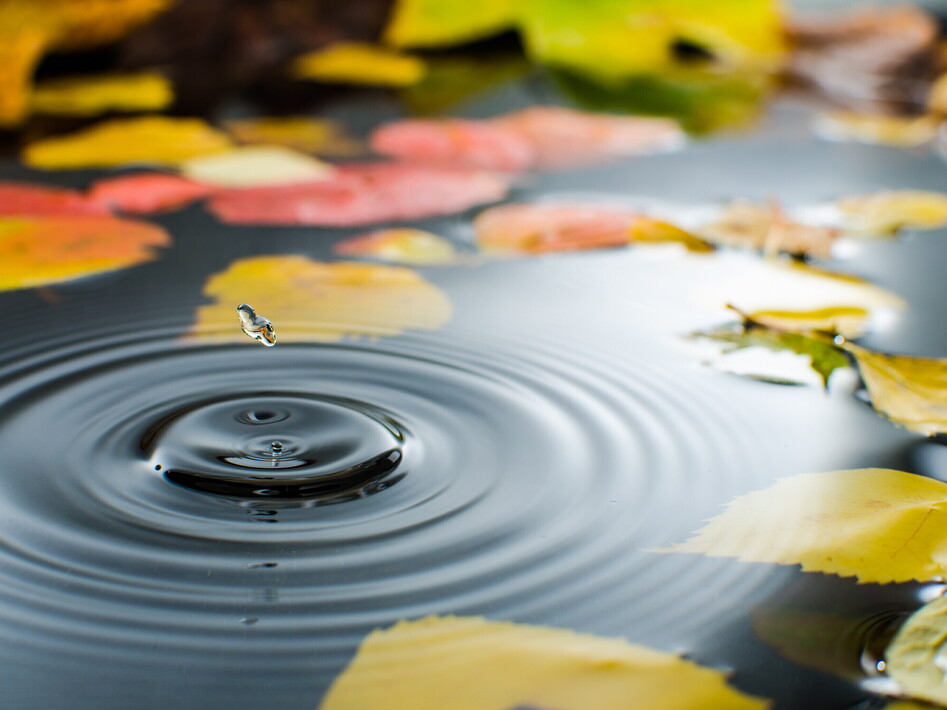

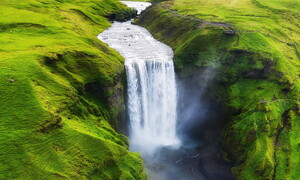
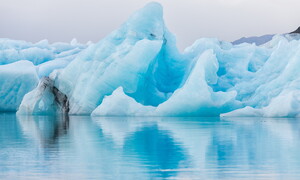
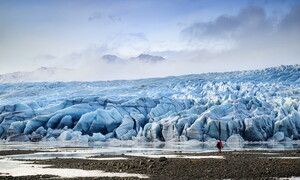
Water is an odourless, tasteless and colourless liquid. The water molecule is formed by two hydrogen atoms bonded to one oxygen atom (H2O). Moreover, water is the only natural resource present on Earth in the three states of matter: solid, liquid and gas. Pure water passes from the liquid to the solid state, in other words it freezes, at 0°C. At sea level, instead, it boils at 100°C (the higher the altitude, the lower the temperature at which water starts boiling). When water freezes, it expands and its density decreases at constant volume: it is for this reason that ice floats on water or a bottle full of water cracks when kept in the freezer. Water can be found in its liquid state in rain and dew, but especially in seas, lakes and rivers. In its solid state, water is present as ice, snow and frost while in its gaseous state it is present as vapour and fog. Water vapour is also a major component of clouds. Thanks to the Sun’s energy, water is constantly in motion: all the processes through which water passes as it leaves the ocean, enters the atmosphere, reaches dry land and then returns to the ocean make up the water cycle.