

Galaxies in reverse
26 November 2025
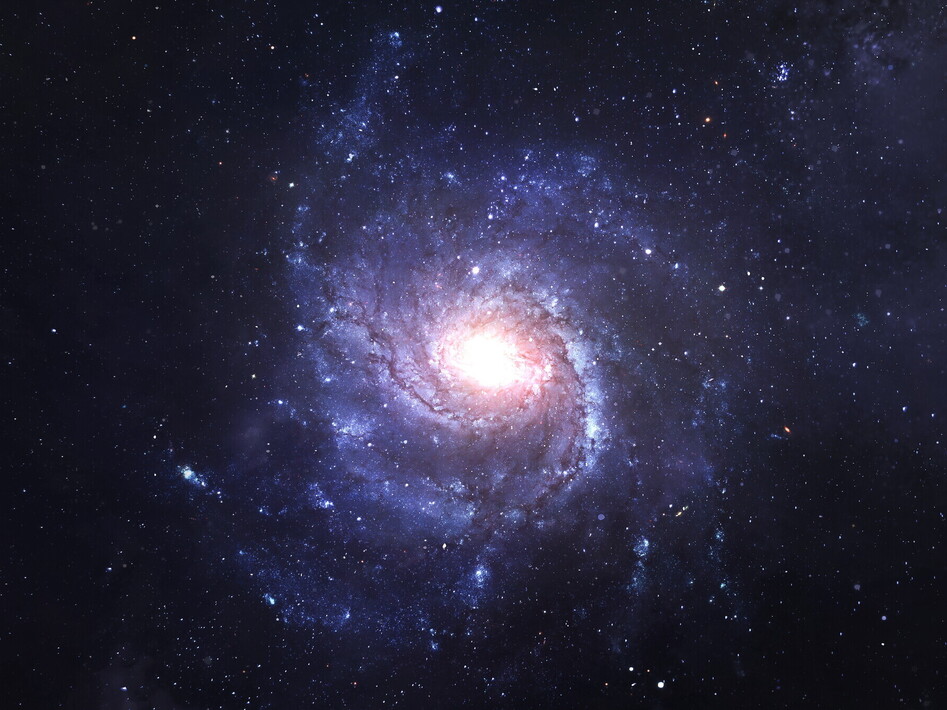

Imagine a gigantic eye peering back through time, almost to the dawn of the Universe. That is the James Webb Space Telescope (JWST), and it is uncovering findings regarding the oldest, most distant galaxies that leave us astonished.
One of its most important programmes, JADES, has combed the deep sky, revealing details never seen before. And what did it find? A genuine puzzle concerning how spiral galaxies rotate! Analysing spiral galaxies in the JADES field, scientists made a surprising discovery: the number of galaxies rotating in the direction opposite to our Milky Way is about 50% higher than those rotating the same direction. The difference is so stark that, experts say, it could be noticed “even to the naked eye”. To be specific: of 263 galaxies for which the direction was identified, fully 158 rotate clockwise (opposite to the Milky Way) and only 105 anticlockwise (like the Milky Way). It is as if the Universe has a “preference”. This anomaly becomes more evident the further—and thus the earlier in time—we look. A signal this strong, with a probability of occurring by pure chance of just 0.0007, is “statistically very significant”. How does the JWST determine rotation? JWST’s extraordinary imaging power allows it to “see” galaxies too faint or blurred for other telescopes. To avoid subjective errors, the rotation of these galaxies was not determined by humans, but by a computer algorithm called Ganalyzer—an objective, symmetric method that analyses the curvature of spiral arms. It has been verified that spiral arms are an excellent indicator of the direction of rotation of the stellar mass. This “asymmetry” could have far-reaching consequences for our understanding of the Universe. It might even help resolve other cosmological mysteries, such as the “Hubble tension” (a discrepancy over how fast the Universe is expanding) and the unexpected presence of massive, mature galaxies in the very early Universe. Many of JWST’s recent discoveries, including this one, are already considered to be at odds with the standard cosmological model. There are two main avenues to explain the finding.
The first: the Universe is less uniform than we thought. If this asymmetry is a genuine feature of the Universe, it suggests that the primordial Universe was not perfectly homogeneous but had a preferred “cosmic axis” for galaxy rotation. This would call into question the Cosmological Principle—the idea that the Universe is uniform and the same in all directions on large scales. Some alternative models posit a rotating Universe or one with an ellipsoidal geometry, perhaps even contained within a “parent black hole” in a larger universe.
The second: the asymmetry might be an illusion caused by how we observe galaxies from Earth. One hypothesis involves the Doppler effect: galaxies rotating in the direction opposite to the Milky Way might appear slightly brighter, making them easier to detect. However, the 50% difference is far greater than what the Doppler effect alone should produce. This could indicate that the “mysterious physics of galactic rotation”, not yet fully understood (often associated with dark matter), influences galactic light in unknown ways. If rotation affected light so profoundly, it might even alter redshift (shift of light) and help explain the Hubble tension and the unexpected ages of certain galaxies. In the past, some studies suggested that galaxy rotation directions were random. But those investigations often used limited data or less rigorous methods. The new JWST data and more precise analyses clearly demonstrate that the asymmetry exists and is significant. Even re-analysing older data with the new methods brings out the asymmetries. JWST is genuinely revolutionising cosmology. This asymmetry in deep-galaxy rotation is a new, important piece of the puzzle that could lead us to rewrite our understanding of the Universe and its fundamental physical laws. The research is only just beginning and promises decades of exciting discoveries.