


The perfect pitch: the science behind World Cup 2026 turf
22 June 2026
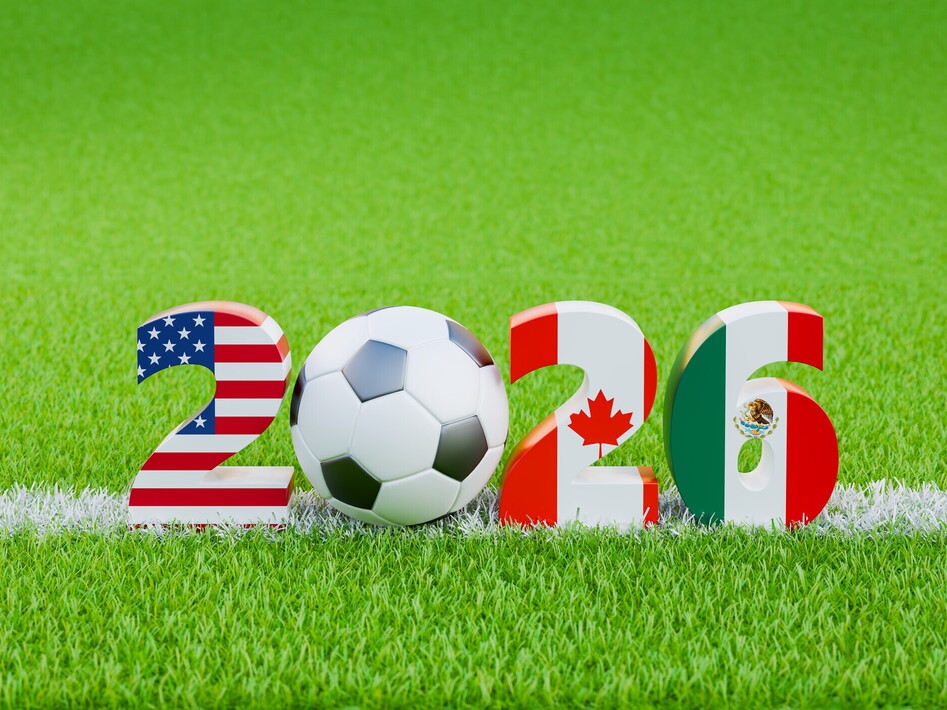

When a professional footballer runs across a pitch, their attention is on the ball, their opponents and the tactics. The grass beneath their feet, ideally, should barely be noticed. And yet the quality of that surface affects every sprint, every change of direction and every bounce of the ball. Ensuring that this experience is identical across sixteen stadiums spread over a vast geographical area, from the United States to Canada and Mexico, is one of the least visible but most complex scientific challenges of the FIFA World Cup 2026.
In recent years, this task has been led above all by researchers from the University of Tennessee (UT) and Michigan State University (MSU), commissioned by FIFA to develop technological solutions to guarantee the quality and uniformity of the pitches. The result is a set of methodologies, tools and agronomic approaches that go far beyond the ordinary maintenance of a sports pitch. Previous editions of the World Cup, in Qatar in 2022 and Russia in 2018, were held in stadiums designed and built specifically for the tournament, with pitches laid from the outset according to FIFA specifications. In 2026, the situation is radically different: none of the sixteen host stadiums was built for this event. Many were designed for other sports, some have artificial turf surfaces, and at least five are in fully indoor environments, with no natural sunlight. The geographical distance between the stadiums adds another layer of complexity. During the 2022 World Cup in Qatar, the greatest distance between any two venues was around 77 kilometres. In 2026, the furthest-apart stadiums are more than 5,000 kilometres from one another, spread across radically different climates: from the humid heat of Houston to the continental climate of Kansas City, from the milder temperatures of the Californian coast to the northern conditions of Canada. And yet FIFA rules require the ball to bounce and roll in the same way on every pitch, and every player to feel the same consistency underfoot. John Sorochan, who leads the turfgrass research programme at the University of Tennessee, has described how this requirement repeatedly woke him in the middle of the night during the two years leading up to the tournament, with one concern above all: how do you keep natural grass alive for ten weeks without sunlight?
Not all sports fields place the same demands on the playing surface. In baseball, much of the action takes place along the base paths, which are dirt; in American football, the oval ball rarely bounces on the ground in any meaningful way. For these sports, it is enough for the surface to be compact enough to provide players with traction. Football is different. The ball rolls and bounces continuously across the grass, and that bounce must be predictable and uniform at every point on the pitch, and consistent from one pitch to the next. John Rogers, a researcher at Michigan State University, compares football’s requirements to those of golf greens: extremely high-quality grass surfaces, dense and free of gaps, where every irregularity alters the behaviour of the ball. Professional footballers immediately sense any anomaly. If the bounce does not match what they expect after a shot or a pass, the first cause players identify is almost always the pitch. Safety, too, is a central concern: a footballer who stops suddenly or plants a foot to change direction needs to know that the ground will provide the necessary traction without giving way, which could cause injury, or gripping the foot too firmly, with equally dangerous consequences.
To assess the mechanical properties of the playing surfaces, researchers at the University of Tennessee developed a tool called fLEX. The idea originated in 2018, when Sorochan was working for the National Football League Players Association on an international game that was due to be held in Mexico City. The designated pitch was deemed unsuitable, but the measuring tools available at the time were unable to detect the properties of the surface from the perspective of an athlete in motion. Sorochan and his colleague Kyley Dickson therefore designed fLEX: a 3D-printed artificial foot, fitted with football studs and surrounded by sensors, mounted on a mechanical arm that reproduces the impact movement of a footballer of average weight, around 76 kilograms, while running. The tool measures the amount of energy the ground returns to the foot with each step, as well as the traction available during sudden stops or changes of direction. Since its introduction, fLEX has been used to test more than one hundred pitches in Canada, the United States and Europe. During the 2026 World Cup, it will be used to analyse 77 different points on each pitch, producing heat maps that show where the ground has become more compact as a result of player traffic. These data allow pitch managers to take targeted action: in some cases by treating critical areas, in others by changing the type of studs recommended to players. Measuring the ball’s bounce, however, follows a different approach. Michigan State University researcher Jackie Guevara has developed a method based on sound analysis: the ball is dropped from a standard height and software analyses the interval between the two impact sounds, the first when it hits the ground and the second after the bounce. From this interval, the height of the bounce can be calculated, a parameter directly related to the consistency of the grass and the soil beneath it. Over the past sixty years, agronomic researchers have selected increasingly high-performing grass varieties that are resistant to disease, tolerant of drought and suited to specific climatic conditions. For the 2026 World Cup, the climatic diversity of the stadiums has required different grass varieties to be chosen for each venue: cool-season grasses for the northern locations, and varieties tolerant of extreme heat for Houston and the other cities in the southern United States. The turf is produced on specialist farms that grow ready-to-use sod. Most of the turf for the 2026 World Cup was seeded between March and June 2025. A few days before the matches, these sod rolls will be transported to the stadiums and installed. Some pitches will be less than two weeks old when the competition begins. The traditional problem with this process is transplant shock: when the sod is cut and lifted, some of the roots are severed, and the plant takes time to root into the new substrate. For a pitch that has to withstand dozens of matches over the space of a few weeks, this is an unacceptable risk. The solution adopted for the 2026 World Cup is elegant in its simplicity: the grasses are seeded in a soil substrate positioned above a layer of plastic. When the roots reach the plastic, they cannot penetrate it, so they grow sideways and intertwine, forming an extremely strong structure. When the time comes for transplantation, the sod is simply peeled away from the plastic without damaging the roots. Once installed at the new site, the grass can quickly take root in the substrate below. The sod rolls produced using this method are impressive in size: 1.1 metres wide, 10.7 metres long and weighing 1,600 kilograms each. This considerable weight also helps keep them in place during play. Some varieties are further reinforced with synthetic fibres woven into the grass, a technology already used on FIFA pitches in Europe in previous editions of the tournament. Beneath the turf, in both outdoor and indoor stadiums, a ventilation and drainage system is installed. This system can deliver oxygen to the roots and drain excess water downwards. In the event of heavy rain, it can be reversed to create suction, removing excess water from the surface and eliminating any risk of waterlogging. The most unusual challenge concerns the five fully covered stadiums, where sunlight does not reach the playing surface. Grass, like any plant, depends on light for photosynthesis: without it, it cannot grow or remain viable for the weeks required by the tournament. The solution adopted involves the use of large LED lamps mounted on mobile structures that are periodically positioned above the pitch. These lamps emit light with a distinctive pinkish hue, a visual effect produced by the combination of two specific wavelengths: around 90–95 per cent red light and 5–10 per cent blue light. The predominance of red light is not accidental: it is more energy-efficient than blue light, which requires greater electricity consumption. But the spectral composition of the light also affects the growth characteristics of the grass: red light encourages taller, more vertical growth, while blue light produces shorter, more compact plants with a greater ability to withstand heavy foot traffic. Researchers calibrate the ratio between the two components according to the characteristics desired for each pitch. Even the best installation will not guarantee a perfect pitch for the entire duration of the tournament without proper maintenance. Pitch managers will have to water, fertilise, mow and groom the turf every day. Frank Rossi, a researcher at Cornell University in Ithaca, emphasises the importance of controlling soil moisture. Grass roots need a consistently moist environment: if the soil dries out too much, it becomes dusty and crumbly, creating risks for the stability of the pitch. Data collected by sensors distributed throughout the soil guide managers’ irrigation decisions. Grass cutting is another critical variable. The frequency and height of mowing affect both the density of the turf and the behaviour of the ball. Researchers at the University of Tennessee and Michigan State University have determined that the optimal mowing height, around 3.8 centimetres, ensures a uniform ball bounce regardless of the grass variety used. Greater mowing heights slow the ball and can alter its roll; lower mowing heights make the pitch more vulnerable to damage from foot traffic. A recent innovation in the maintenance of sports pitches is the use of robotic lawn mowers. These autonomous devices are already used on numerous sports pitches and make it possible to reduce manual labour significantly. A study published in May 2025 showed that the mowing frequency provided by these tools, combined with their lower weight compared with traditional machines, which compresses the soil less, improves the overall health of the turf.
Scientific interest in the quality of playing surfaces does not stop at elite competitions. Many schools and amateur sports organisations have opted for artificial turf over the years, attracted by the promise of simpler maintenance. Experience, however, has revealed significant drawbacks: falls on artificial grass are more painful; synthetic surfaces in the height of summer can reach dangerously high temperatures; and plastic fibres disperse into the environment, contributing to microplastic pollution. The technological solutions developed for the 2026 World Cup could, in the medium term, make the management of natural-grass pitches more accessible even in settings with limited resources, reversing a trend that has favoured practicality at the expense of quality and environmental sustainability. Ultimately, the work of researchers at the University of Tennessee and Michigan State University has a twofold aim: to make the 2026 World Cup a tournament in which playing conditions are never a variable, while at the same time building a body of knowledge that can be applied at every level of sport. If all goes well, no one — not players, not fans, not commentators — will talk about the grass. And that, paradoxically, will be the best possible outcome.
Source: Laura Allen, Janet Raloff, "Perfect pitch? Scientists lay new grounds for World Cup '26", Science News Explores, 13 May 2026. snexplores.org