


A lost civilisation hidden beneath the Amazon rainforest
29 October 2026
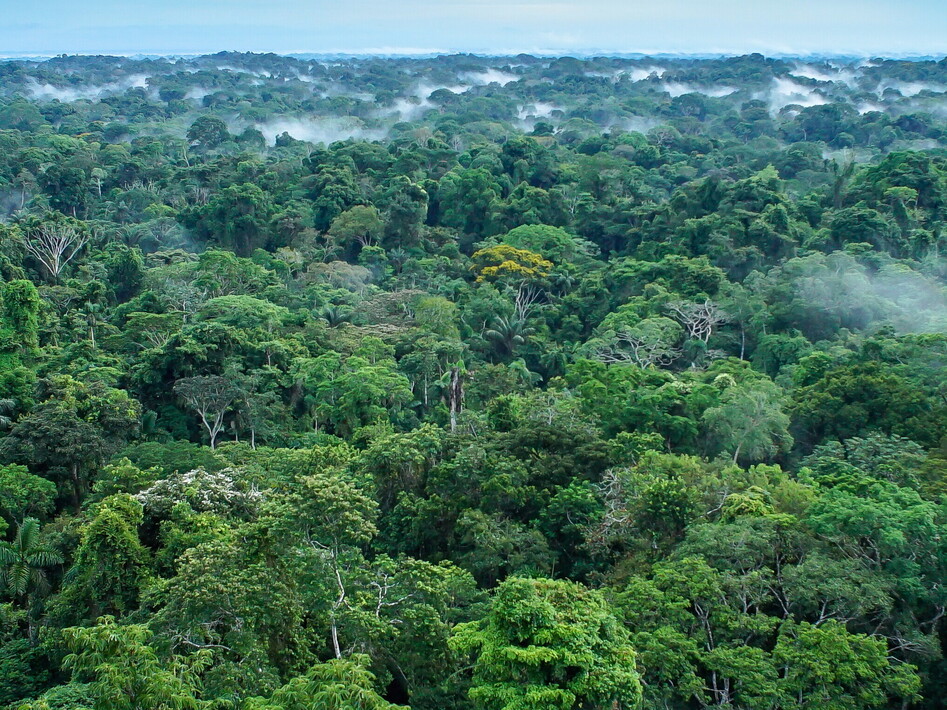

For centuries, we have imagined the Amazon rainforest as a wild, uninhabited place, almost untouched by human activity. But a new study, published in the scientific journal Nature, is challenging this image: concealed beneath the dense forest canopy may be traces of an ancient civilisation whose population could have reached three million.
The problem for archaeologists has always been the same: how do you find out what lies beneath such a dense forest, where the trees completely obscure the ground? The answer has come from a technology known as LiDAR (short for "Light Detection and Ranging"). Here is how it works: an instrument, usually mounted on an aircraft, sends countless laser pulses towards the ground. Some of these beams pass through tiny gaps between the leaves, reach the ground and then bounce back. By measuring how long each pulse takes to return, scientists can reconstruct an extremely precise three-dimensional map of the terrain, even when it is completely covered by vegetation. A team of researchers from the University of Helsinki used this very technique to explore an area of more than 4,400 square kilometres in the south-western Amazon basin, spanning Brazil, Peru and Bolivia. Using LiDAR, the researchers discovered thousands of geoglyphs: enormous geometric designs, such as circles and squares, carved into the ground by the area's ancient inhabitants, often linked by long, straight roads. These features belong to the Aquiry civilisation, which inhabited the region from around 600 BC to AD 850. The results surprised even the researchers: the population of the Aquiry civilisation may have been up to three times larger than previously thought, reaching between 1.25 and three million people. As Professor Pärssinen explained, based on LiDAR analysis of a 4,500 km² area, scientists estimate that the wider Aquiry region, covering 183,000 km², could contain between 24,000 and 30,000 human-made structures, connected by hundreds of roads. This represents a transformation of the landscape that, until recently, no one had imagined possible in that part of the Amazon. Before LiDAR was available, archaeologists could study only areas of rainforest that had already been cleared, where ancient structures were visible from above. For a long time, this led to a mistaken belief: that only the more “open” parts of the forest had been inhabited in the past, while its densest, most undisturbed areas had always been uninhabited. We now know this is not the case. As Pärssinen points out, the findings suggest that many other parts of the Amazon may once have been far more densely populated and extensively shaped by humans than previously believed, challenging the widespread idea of the rainforest as an entirely "wild" environment untouched by human activity. But scientists are not stopping there: the next phase of the project will also use LiDAR, this time with a different aim: to identify tree species that ancient populations had learned to cultivate, such as fruit- and nut-bearing trees, some of which still grow in the region today. In this way, researchers hope to understand how these "domesticated" trees are distributed in relation to different ecosystems and the ancient structures they have uncovered. What else might still lie hidden, silently, beneath the dense canopy of the Amazon rainforest?