


The world’s rarest whale
22 January 2026
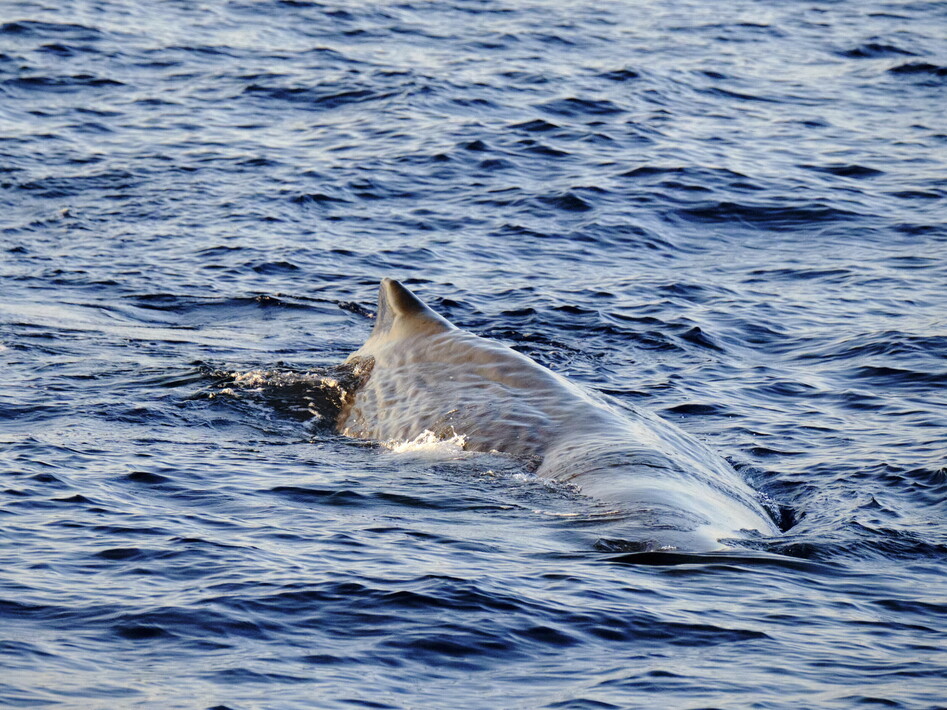

In the vast, uncharted world of the ocean depths, there are creatures that defy our understanding of biology.
Few are more enigmatic than Mesoplodon eueu, one of the rarest whale species on Earth. Despite its bizarre characteristics, it is known to humanity only through a handful of stranded specimens. This whale, a kind of ghost of the deep, possesses anatomical peculiarities that seem straight out of a science fiction tale. Mesoplodon eueu, also known as Ramari’s beaked whale, belongs to the family of beaked whales - a group of marine mammals renowned for their elusiveness and deep-diving habits. Unlike other whales, what we know of this species does not come from sightings at sea, but from a few carcasses found on remote beaches. The first specimens were identified on the shores of New Zealand and South Africa, allowing scientists to attempt to reconstruct the biology of an animal never seen alive. Anatomical analysis of these rare individuals revealed astonishing traits. One of the most fascinating discoveries concerned its digestive system: this whale does not have one, but rather a complex of nine gastric chambers or compartments, giving it the appearance of having “nine stomachs”. This incredible specialisation is likely an adaptation to its diet, presumed to consist of deep-sea cephalopods (like squid and octopus) and fish. The multiple chambers would enable extremely efficient digestion of organic matter - an essential advantage for a creature living in such resource-scarce environments. Another peculiar feature of Mesoplodon eueu is its teeth. Unlike many other beaked whales, males of this species have a pair of teeth that resemble unusual human “wisdom teeth”, visible on the sides of the jaw. While teeth in other beaked whale species are typically used in male combat for territory or mates, their unusual shape in M. eueu suggests a unique evolutionary history and perhaps a distinctive way of fighting. The reason these whales are so rare and difficult to study is their dependency on the deep ocean. Beaked whales are the champions of diving in the animal kingdom: they can plunge to depths exceeding 3,000 metres and remain underwater for hours. Their interactions with the surface are minimal, making them nearly invisible to humans. Their existence reminds us of how little we truly know about our own planet - especially the deep ocean ecosystems. Studying Mesoplodon eueu is not just a matter of curiosity; it’s vital for marine conservation. Its extreme adaptations offer a glimpse into how life has evolved in environments we see as inhospitable. Its existence - known only after death - is a powerful, haunting reminder that by protecting our oceans, we may also preserve countless species we have yet to even discover.