


The mosquito’s mouth inspires a new 3D-printing technology
17 April 2026
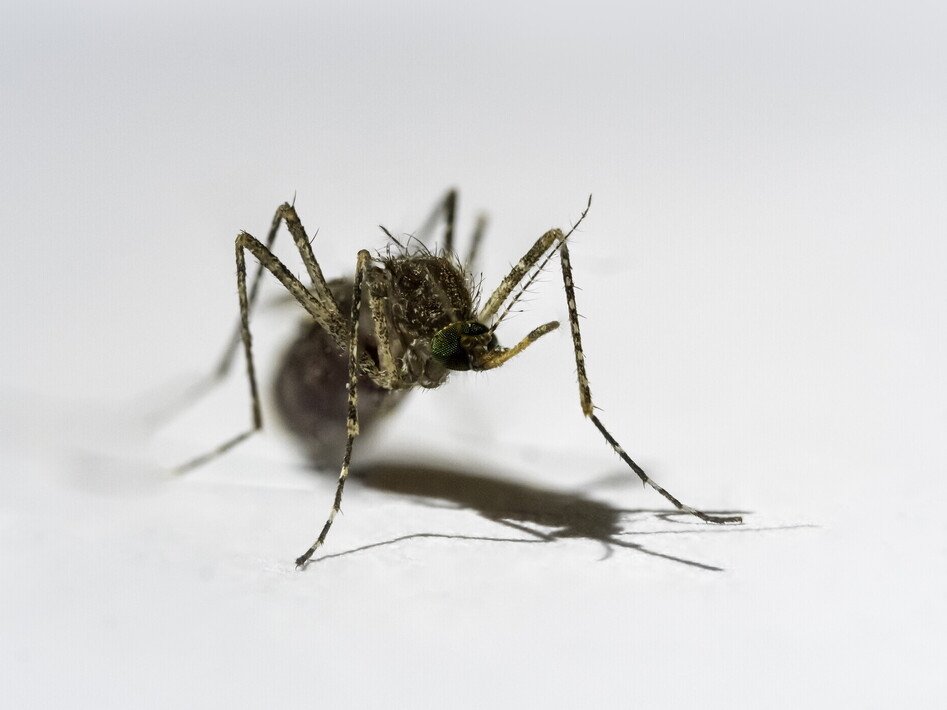

Mosquitoes are extremely annoying insects, especially when they bite us to suck blood. Yet their mouthparts have inspired a surprising new technology. Some researchers have discovered that the mosquito’s proboscis can be used as a nozzle for ultra-precise 3D printers. This idea shows that even the smallest animals can teach us something useful for technology.
The mosquito has a very special mouthpart called a proboscis: a kind of thin tube, a microscopic syringe used to pierce the skin and suck blood. This tube is extremely fine, with a diameter of about 20-30 micrometres, roughly half the thickness of a human hair. It was precisely this feature that attracted the attention of scientists. To print very small objects with a 3D printer, extremely tiny nozzles are needed, through which the printing material can be extruded. The mosquito’s proboscis is ideal because it is very thin, sufficiently rigid, as well as straight and resistant. These characteristics make it perfect for allowing a continuous flow of material, just as happens in a 3D printer. To carry out this project, scientists took proboscises from laboratory-reared mosquitoes and fixed them to the tip of a small plastic tube. In this way, the proboscis becomes the final part of the printer nozzle. The printing material is pushed through the tube and then emerges from the proboscis, just as blood passes through the mosquito’s mouth when it bites. Scientists have called this technique “3D necroprinting”, meaning a form of 3D printing that uses non-living biological parts as technological tools. Thanks to the mosquito proboscis, the printer can create lines about 20 micrometres wide, smaller than many cells in the human body. This precision is about twice as good as that of many commercial nozzles used in 3D printers today. Using this system, researchers were able to print microscopic structures, such as tiny honeycomb-shaped models, a miniature maple leaf and even specialised structures for cultivating living cells. These structures could be useful in fields such as medicine and biological research, for example in the study of cells or tissues. Another advantage of this technology is cost. Very small glass or metal nozzles can cost up to 80 dollars, whereas a mosquito proboscis may cost less than one dollar. This means that in the future it may be possible to develop 3D-printing tools that are both cheaper and more sustainable. Once again, the discovery shows that nature can be a great source of inspiration for scientists. Structures shaped over millions of years of evolution, such as the mosquito’s mouthparts, can become perfect models for new inventions. Even though mosquitoes remain highly irritating insects, scientific research may yet give them a useful role in the development of new technologies. Thus, a tiny animal that we usually try to swat away could end up helping to improve the 3D printing of the future.