


A terrestrial fungus could survive in space and reach Mars
5 May 2026
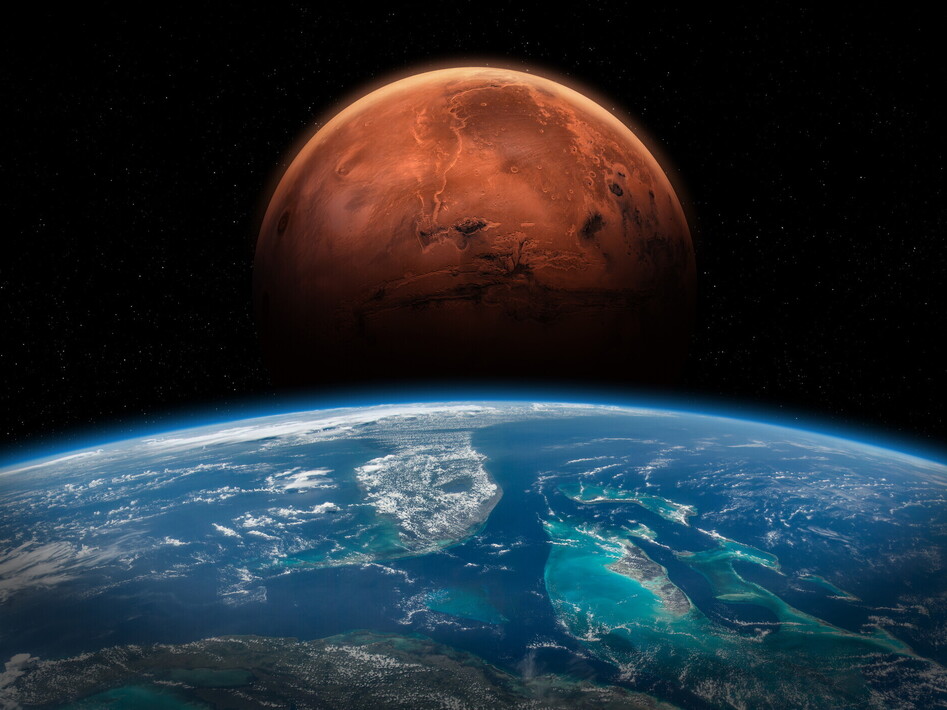

When we imagine a journey through space, we think of astronauts, satellites or robotic explorers. But scientists have discovered that there may also be invisible passengers: tiny organisms from Earth capable of surviving the extreme conditions of space.
Among them is a fungus called Aspergillus calidoustus which, according to new research, could withstand the long journey to Mars. The discovery began in very unusual places: NASA cleanrooms: ultra-clean laboratories where space probes are built and prepared. In these rooms, everything is carefully controlled to prevent microbes or dust from contaminating spacecraft bound for other planets. Despite these precautions, researchers found 27 different types of fungi on laboratory surfaces. This means that some microorganisms can survive even the strictest cleaning procedures. To understand how resistant these fungi were, scientists collected their spores: tiny structures that allow fungi to reproduce and survive when the environment becomes hostile. The spores were then subjected to a series of tests simulating the conditions of space and Mars. The trials included extremely strong ultraviolet radiation, extremely low temperatures down to around –60°C, very low atmospheric pressure, radiation similar to that found in deep space, and dust resembling Martian soil. The results surprised scientists: many spores survived, and those of Aspergillus calidoustus proved particularly resilient. According to the study, this fungus could theoretically survive every stage of a space mission: from preparation on Earth to the journey through space and arrival on Mars. This does not mean that Mars will necessarily be “contaminated” by terrestrial organisms. However, the discovery shows that some microbes are far more resistant than previously thought. Scientists stress that only a combination of extreme conditions, such as intense radiation together with severe cold, succeeded in completely destroying these spores. The research is highly significant for planetary protection. Space agencies must prevent Earth microbes from contaminating other planets because, if a terrestrial organism reached Mars, it could confuse scientific studies: researchers might mistake it for Martian life. For this reason, understanding the most resistant microbes helps improve the cleaning techniques used for space probes and makes future missions safer for scientific research. This study shows just how incredibly resilient life on Earth can be. Some microscopic organisms can survive in environments considered impossible: extreme cold, intense radiation and an almost total absence of air. Studying these microorganisms is useful not only for protecting other planets, but also for understanding the limits of life’s ability to adapt. And perhaps this very research will help scientists discover whether life really exists beyond Earth.