


Pollution is confusing ants’ sense of smell
24 February 2026
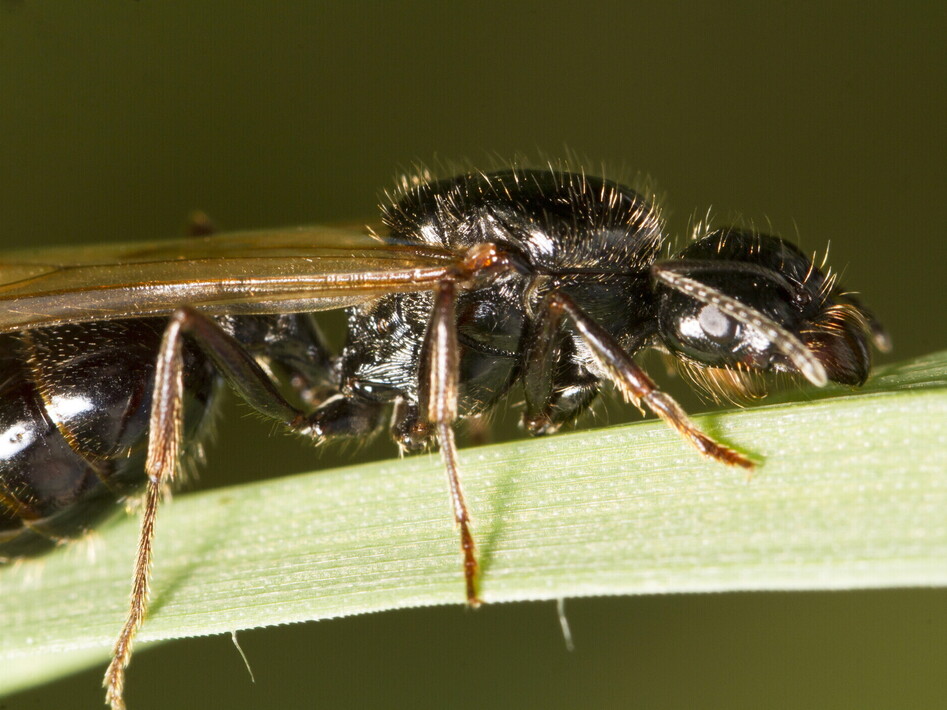

Did you know that ants account for as much as two thirds of the biomass of all insects worldwide? They are everywhere, and the secret of their global success lies in an almost perfect social structure. But there is a problem: human activity is releasing an invisible enemy into the air that threatens to shatter this harmony. We are talking about ozone pollution.
To understand what is happening, we need to think of ants as chemistry experts. They do not recognise one another by sight, but through a chemical “scent passport” made up of molecules on their cuticle, known as cuticular hydrocarbons (CHCs). Within this mixture there are specific molecules, alkenes, which are essential for telling an ant: “Hey, I’m your sister, I belong to your nest.” The problem is that alkenes have a fragile chemical structure, with carbon double bonds that ozone can break very easily. And we humans have filled the atmosphere with ozone. In an unpolluted area, levels may be around 10 parts per billion; in cities they rise to around 30, and in the most polluted areas they can exceed 100 or even 200. A recent study by the Max Planck Institute revealed disturbing scenarios. Researchers took harvester ants, Messor barbarus, and exposed a single individual to ozone levels similar to those found in our cities. When that ant was returned to the nest, chaos broke out: its own nestmates began attacking it. Bites, headbutts, threats with gaping mandibles... they no longer recognised it as one of their own. Ozone had literally “erased” its chemical identity. But it gets worse. Researchers also observed the effects on brood care in the species Ooceraea biroi. Here, ozone exposure caused a genuine social breakdown: adult ants began to ignore the larvae, moving away from them and leaving them to die. It was not that ozone was poisonous to the young; rather, the “communication channel” between adults and larvae had been disrupted. Why should this concern us? Because ants are not just tiny nuisances at our picnics. They provide vital ecosystem services: they control pests, aerate the soil and even help with pollination. If colonies collapse because ants can no longer “talk” to or recognise one another, the entire natural balance that also supports our agriculture is put at risk.