


Iceberg earthquakes
12 February 2026
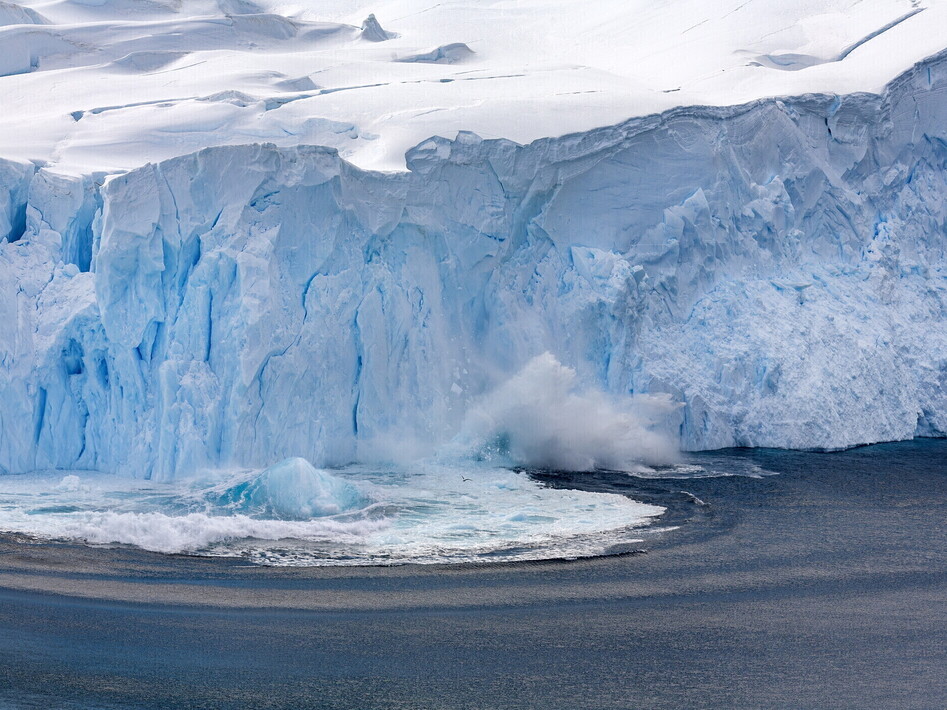

Deep in Antarctica, strange “earthquakes” are being recorded, caused by the detachment of gigantic icebergs. These events, known as glacial earthquakes or iceberg earthquakes, have been measured in large numbers thanks to monitoring instruments placed directly on the continent.
The phenomenon has been observed in particular at the seaward front of Thwaites Glacier, a glacier so important that it has been nicknamed the “Doomsday Glacier”, because its eventual melting could raise sea levels by about 3 metres. But what exactly are these quakes? Unlike ordinary earthquakes caused by the movement of tectonic plates, glacial earthquakes occur when gigantic icebergs break away from the glacier and overturn into the ocean, violently striking the part of the ice still attached. This movement generates slow but extremely powerful vibrations, invisible to standard seismic instruments unless dedicated, extremely sensitive equipment is installed on site. Between 2010 and 2023, a team of researchers identified more than 360 glacial earthquakes recorded between Thwaites and the nearby Pine Island Glacier. About 245 of these events were concentrated precisely at the end of Thwaites, where blocks of ice break off and roll over with great frequency. These earthquakes do not appear to follow a seasonal pattern like those observed in Greenland, where events increase in summer. By contrast, most Antarctic tremors coincide with an accelerated movement of the glacier towards the sea, a process that may be influenced by ocean conditions eroding the ice from below. This discovery is important for two main reasons. First, it tells us that Thwaites Glacier is extremely unstable and constantly changing, with large quantities of ice breaking away and ending up in the sea. Second, these glacial earthquakes can become useful indicators for scientists trying to predict how and how quickly the glacier will weaken and contribute to sea-level rise. Understanding these phenomena more clearly is crucial, because the future of huge coastal cities and entire ecosystems depends precisely on the evolution of glaciers such as Thwaites. Even if full collapse could take decades or centuries, every new piece of data helps us read the planet’s warning signs and prepare for a world that is changing rapidly.