


How the brain perceives touch
10 January 2026
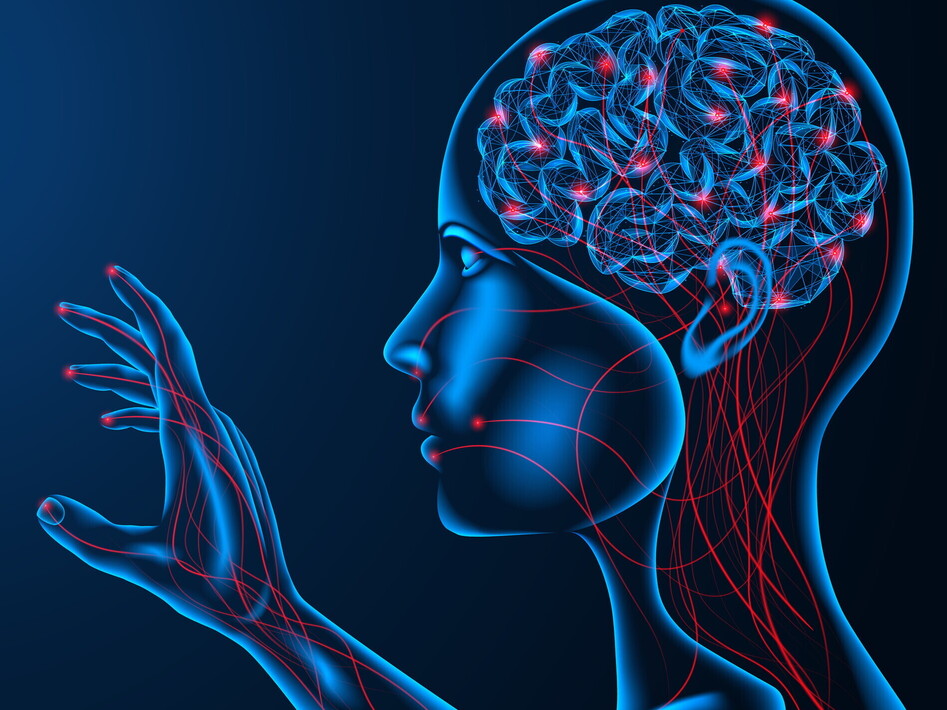

When we watch someone brush their hand against a surface or gently touch another person, our brain reacts with remarkable speed.
Recent Australian research highlights just how crucial vision is in understanding touch – an experience we typically associate with physical sensation. We do not need to feel pressure or contact ourselves; simply observing a touch is enough to trigger a sophisticated set of neural processes. Researchers recorded the brain activity of people who watched videos showing hands engaged in different types of contact, such as light strokes, pressure, or interactions with objects. Using EEG recordings and multivariate decoding techniques, researchers found that the brain begins to recognise key elements of the scene astonishingly quickly. The first signals to emerge relate to bodily cues such as hand orientation or viewing perspective, emerging after just 60 milliseconds. Shortly afterwards, between 110 and 160 milliseconds, the brain begins to identify more complex sensory details including the type of touch or the object involved. In this same time window, it also detects the emotional valence of the interaction – whether the contact appears pleasant or unpleasant. Only a few dozen milliseconds later, the brain processes stronger emotional information such as perceived threat, pain, or heightened emotional response, with this activation becoming clear at around 260 milliseconds. These findings show that our ability to interpret touch through sight does not rely on slow, deliberate reasoning. Instead, it is an automatic, near-instantaneous process mediated by visual pathways that rapidly extract both the physical and emotional features of a scene. Analyses reveal another layer of complexity: while bodily cues appear across a wide range of neural frequencies, sensory and emotional characteristics are mainly linked to slower bands such as delta, theta, and alpha – the same frequencies often associated with perception and affective processing. The study suggests that even without feeling a touch on our own skin, a part of us still “senses” it. In less than the time it takes to blink, the brain reconstructs what is happening to others and grasps not only the physical action but also its emotional significance. This mechanism allows us to swiftly react to others’ intentions and states of mind and likely played a crucial role in the evolution of our social abilities.