


Earth's oldest impact crater dates back three billion years
22 September 2026
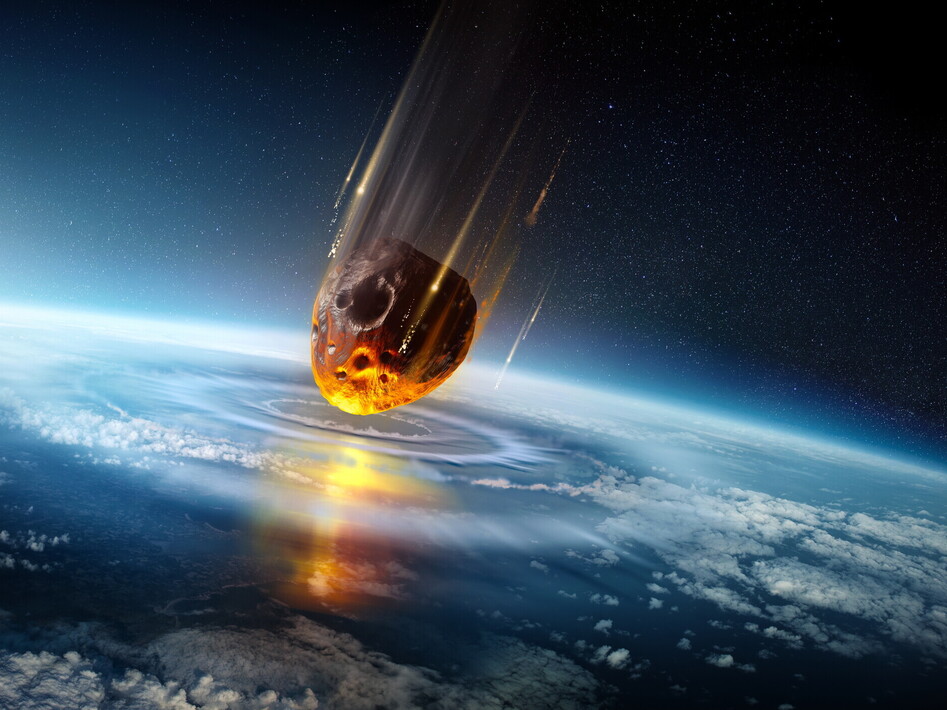

In Australia's Pilbara region lies an ancient secret: the remains of the oldest impact crater ever identified on Earth. A team of geologists led by Professor Chris Kirkland of Curtin University has finally determined its exact age, publishing their findings in the scientific journal Geology.
Around three billion years ago, a large asteroid crashed into what is now known as the North Pole Dome, in the heart of Western Australia. At the time, Earth was still very young: the first continents were only just beginning to form, during a geological period known as the Archean. When an asteroid strikes a planet's surface with tremendous force, it leaves distinctive marks in the rocks. One of these is called a shatter cone: a cone-shaped structure that forms in rock as a result of an extremely powerful impact, such as a meteorite strike. Scientists had already discovered several shatter cones at the North Pole Dome, but they could not establish their age with any certainty: estimates ranged from 3.47 billion to just 400 million years ago, an enormous difference! Determining the exact age of such an ancient crater is extremely difficult because, over billions of years, rocks are altered by heat, pressure and water, making it hard to distinguish traces of the original impact from those left by subsequent geological events. To solve the mystery, the researchers turned to a tiny but exceptionally resilient mineral: zircon. Zircon is well known among geologists because it can preserve information about its history for billions of years, acting almost like a "geological clock". When scientists analysed zircon crystals found in the crater rocks, they noticed something unusual: some had branching, irregular shapes, very different from their normal appearance. This is a characteristic sign of crystals that have been disrupted and partially regrown by the intense heat generated by an impact. By studying these crystals, the researchers calculated that the event occurred approximately three billion years ago. To confirm their findings, the team also analysed a second mineral, apatite, which formed when extremely hot fluids passed through rocks damaged by the impact. Remarkably, this second analysis, conducted entirely independently of the first, produced exactly the same result: strong evidence that both minerals recorded a single major event, a meteorite impact. Thanks to this study, the North Pole Dome is now officially recognised as the oldest known impact crater on Earth, and the only one so far conclusively identified from the Archean Eon. On the Moon, which has neither an atmosphere nor tectonic plates to erase the evidence, the scars left by countless impacts during the first billions of years of the Solar System are clearly visible. On Earth, by contrast, almost all these traces have disappeared: wind, water, volcanoes and the movement of continents have erased nearly every sign of our planet's most distant past. This is what makes the Pilbara crater so valuable: it offers a rare, direct glimpse of the violent asteroid bombardments that helped shape the planet we live on today, billions of years ago.
(Source: Geology, June 2026)