


An army of 130,000 octopuses takes on the blue crab in the Adriatic...
28 September 2026
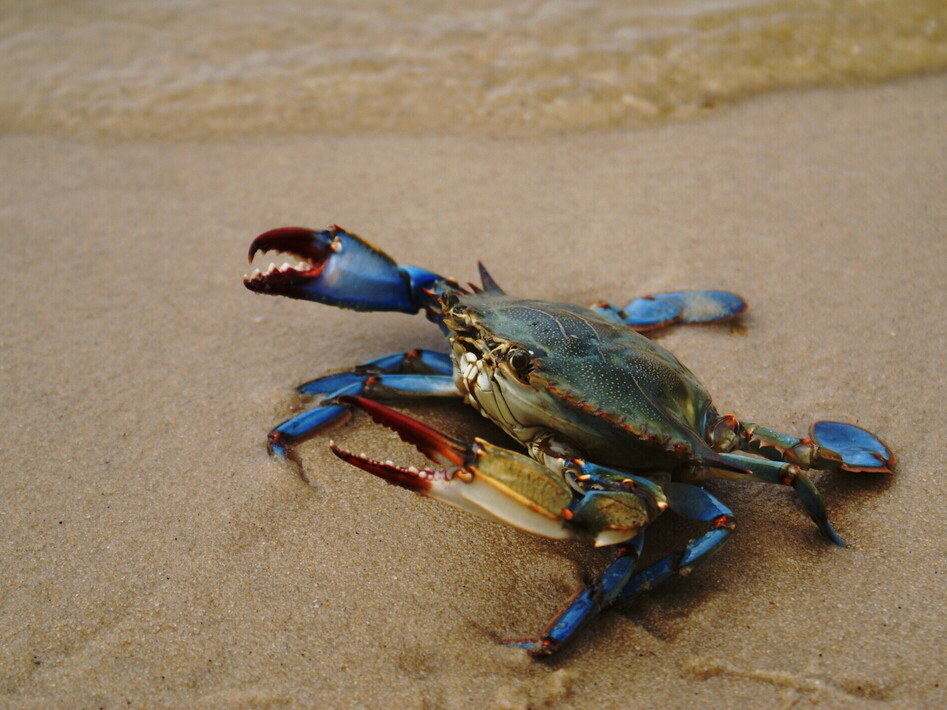

An unusual battle is taking place in the Adriatic Sea: on one side is the blue crab, an invasive crustacean from America that is threatening Italy's fishing industry; on the other, an army of 130,000 tiny octopuses, bred in the laboratory and released into the sea specifically to combat it.
This is the Octo-Blu project, run by the University of Bologna in collaboration with the Emilia-Romagna regional government. The Atlantic blue crab (Callinectes sapidus) is native to the Atlantic coast of North America and is thought to have arrived in the Mediterranean decades ago in ships' ballast water (the water ships take on to maintain stability while sailing). For many years, its population remained small, but from 2022–2023 onwards, numbers soared. The problem is that the blue crab is a voracious predator: it eats virtually anything it finds on the seabed, including young clams, mussels and oysters. The result? An estimated €200 million in damage to the Italian fishing industry as a whole, with Emilia-Romagna and the Po Delta among the hardest-hit areas. To make matters worse, the blue crab has few natural predators in Italy capable of keeping its numbers under control. Scientists working on the Octo-Blu project, coordinated by Professor Oliviero Mordenti, decided to turn to a familiar inhabitant of Italian waters: the common octopus (Octopus vulgaris), a highly intelligent cephalopod and, above all, a formidable predator of crustaceans. In laboratory experiments, the researchers demonstrated that octopuses are indeed capable of hunting and eating blue crabs. Under optimal conditions, an adult octopus weighing one kilogram can eat up to four a day. For this reason, the team decided to hatch thousands of tiny octopuses in the laboratory and release them into the sea off the coasts of Cesenatico and Riccione, hoping to boost the natural octopus population and, in turn, strengthen efforts to control the invasive crabs. But this is no easy task. The laboratory-hatched octopuses, known as paralarvae, are just a few millimetres long when released, and their chances of surviving to adulthood are extremely slim: the natural mortality rate of these tiny animals is estimated to be as high as 99.9%. In practice, only a very small proportion of the 130,000 paralarvae released will actually survive and grow. There is another challenge, too: with its sandy seabed, the Adriatic coast is not an ideal breeding habitat for octopuses, which generally prefer rocky areas where they can find shelter. This is why some independent experts remain cautious: the idea is promising, they say, but it is still too early to know how effective this strategy will actually be in tackling the blue crab invasion. Nevertheless, the Octo-Blu project offers an interesting example of how scientists are exploring natural solutions, rather than chemicals or invasive methods, to restore balance to a marine ecosystem disrupted by a non-native species. Over the coming months, researchers will continue to monitor how many octopuses survive and whether their presence has a measurable effect on blue crab populations along the Italian coast.