


A fossil enigma in the ancient Solnhofen archipelago
18 January 2026
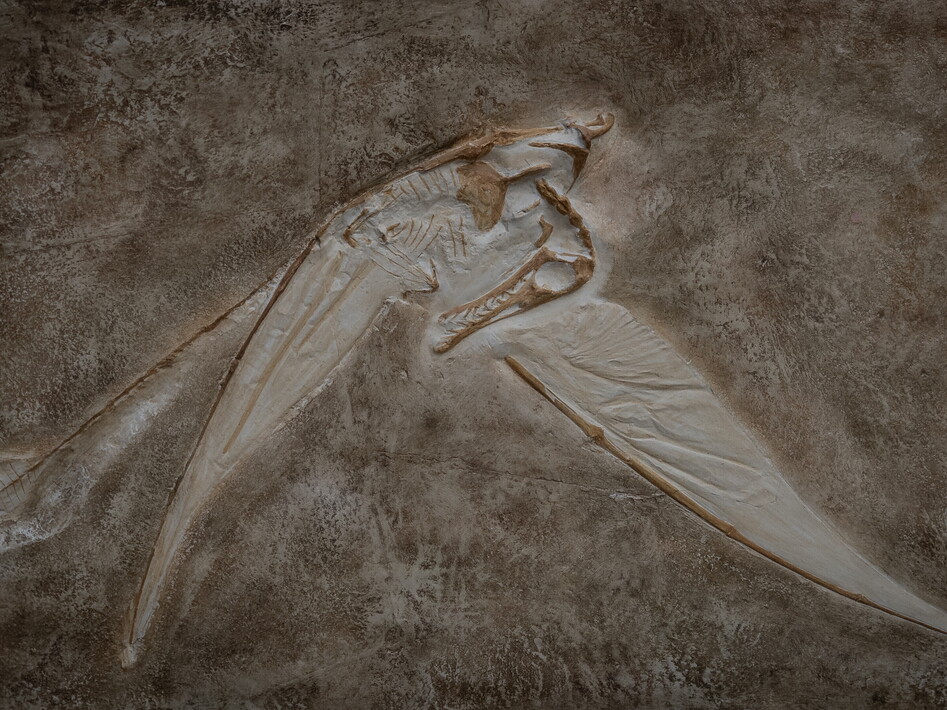

Solnhofen, the German site renowned for its exceptional fossil preservation, has once again yielded astonishing clues from the distant past. This time, the rocks have revealed a large number of juvenile pterosaur skeletons.
But what wiped out an entire brood of these flying dinosaur hatchlings? And why are the fossilised remains of young pterosaurs more commonly found than those of adults? According to the study, the newborn pterosaurs likely perished during sudden storms that caught them off guard and swept them into shallow waters. The lightness and fragility of their bones made them especially vulnerable to the strong winds that battered what was once a cliff-edge coastal environment. These tiny dinosaurs were dragged into muddy seabeds, where they became fossilised more readily than adults. The fossilisation process—and the eventual discovery of fossilised remains—depends on multiple environmental factors. Carcasses submerged in calm waters, rapid sedimentation, and the absence of oxygen all help transform organic matter, especially bone, into stone. The young pterosaurs, presumably unable to fly effectively or withstand heavy wind and rain, were particularly exposed to conditions ideal for fossilisation. This study highlights the need to interpret fossil records with caution. A greater number of fossilised specimens of a particular type can lead to mistaken conclusions: in this case, the abundance of juveniles doesn’t reflect a mass reproduction or selective mortality among the young, but rather a natural difference between juveniles and adults in how likely they are to be preserved during natural processes. It serves as a reminder that fossils tell only part of the evolutionary story. Understanding the causes behind these discoveries helps refine analytical and interpretative methods in the field of palaeobiology. The goal is to distinguish what is biologically meaningful from what is merely the result of geological “chance”.