


Orcas hunting great white sharks
28 December 2025
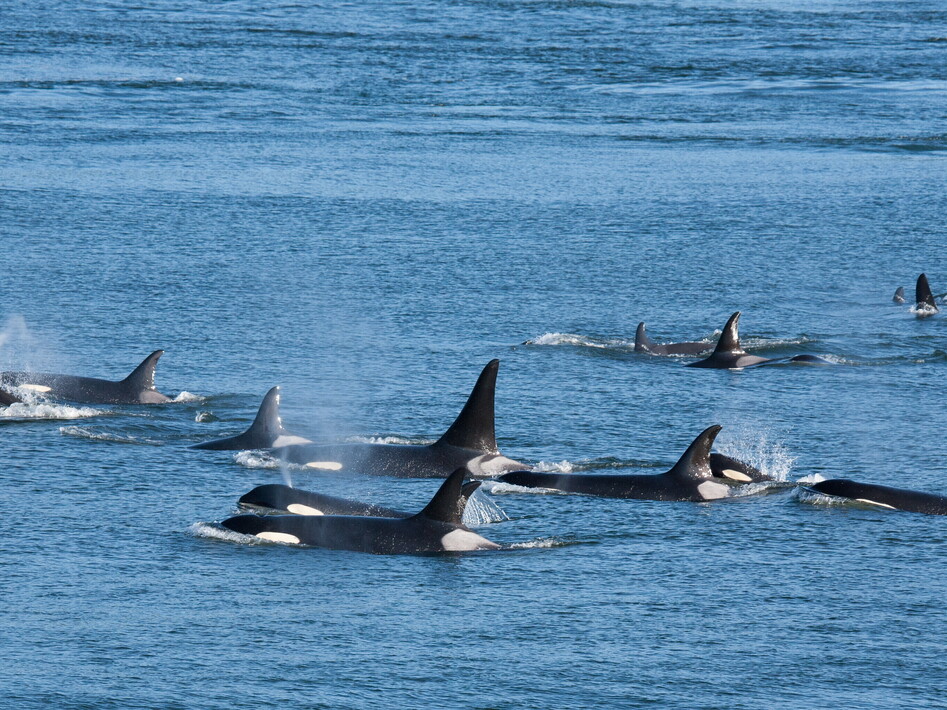

When we think of the ocean, we often picture its most fascinating predators, such as great white sharks or orcas. Orcas, in particular, are known for their intelligence and sophisticated hunting strategies – and scientists have now documented that some orcas have developed a highly effective method for attacking and killing even the most fearsome sharks.
The study describes how a group of orcas in the Gulf of California has devised and put into practice a precise, lethal hunting technique: these orcas manage to flip a great white shark onto its back and bring it to the surface, then immobilise it in a deadly state called “tonic immobility”. Tonic immobility is a temporary state of physical paralysis, sometimes called thanatosis, which is a defensive response seen in many animals. It appears as a stiffening of the body that mimics death and is triggered when escape or fighting is no longer possible. It is a behaviour that can be activated by a predator’s attack or by an intense threat. This means that the shark is turned “upside down”, becomes immobile and loses the ability to react. At that point, the orcas take a very valuable part of the shark: the liver, which is rich in energy and nutrients. This behaviour is particularly striking because it is not just an isolated episode: scientists have observed it on multiple occasions, suggesting that this technique may be spreading among orcas. Moreover, orcas are highly social animals: they learn from one another, pass behaviours down and cooperate when hunting. The study suggests that these orcas may have developed a shared “strategy” that is handed on from one generation to the next.
Why is all this happening? There are several factors that may explain this hunting dynamic. First, young great whites, which are less experienced, may be more vulnerable and therefore represent an easier “prey” for orcas. Another reason is that in some areas shark distribution is changing: for instance, climate-driven phenomena such as El Niño cause shifts in ocean temperature and move shark habitats into regions where orcas live. What are the implications? This behaviour shows once again how intelligent and adaptable orcas are. For sharks, however, the situation may be more challenging: if orcas learn these techniques and spread them within their groups, this could have an impact on great white populations. As one of the researchers behind the study put it: “What is good for orcas is not good for sharks.” What can we learn from this remarkable discovery? First, that in nature everything is interconnected: in the balance between predators and prey, environmental conditions can drive major changes. Second, even animals we consider “apex predators” can be put under pressure by others that adapt more quickly to circumstances. Third, the marine world is full of surprises: it is not only a matter of physical strength, speed and sharp teeth, but also of strategy, learning and cooperation. The discovery that orcas are developing specialised techniques for hunting great white sharks prompts us to reflect on just how dynamic and complex nature is. Behind every “spectacular” scene – such as powerful orcas hunting great whites – there are stories of evolution, adaptation, environment and interaction.