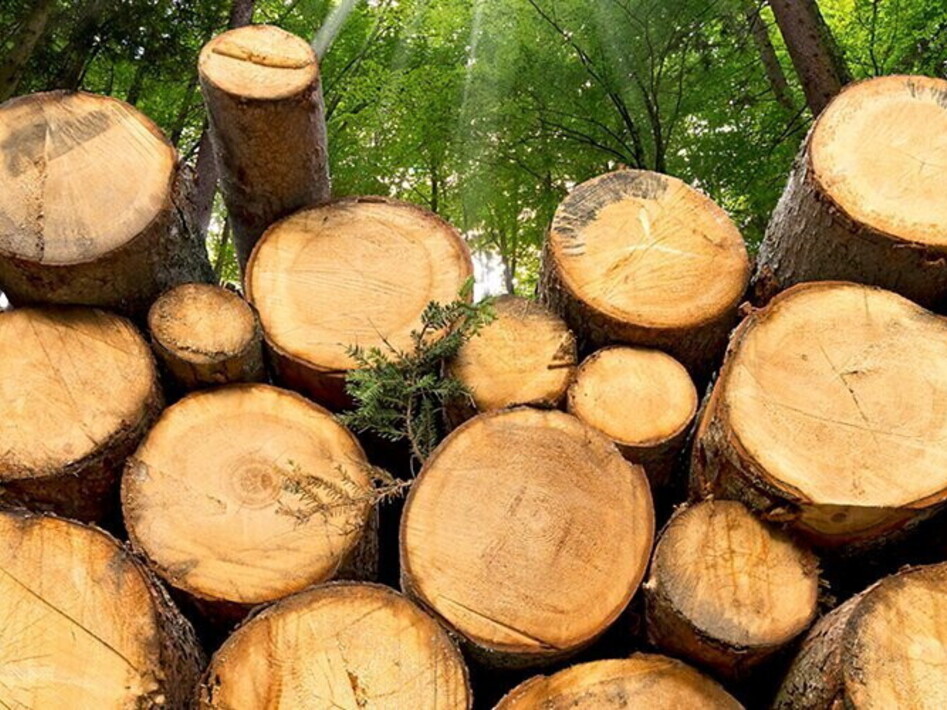

The vegetation that covers our planet is a natural storage of solar energy. The organic matter composing it is called biomass.
Biomass is produced through the photosynthesis process, when carbon dioxide from the atmosphere combines with underground water to produce sugars, starch, cellulose, lignin, protein substances, fats, etc. The same solar energy that activated the photosynthesis is contained in the chemical bonds of these substances. In this way 2 x 10¹¹ tons of carbon are fixed each year, with a corresponding energy content of 70 x 103 megatons of oil.
By burning biomass, atmospheric oxygen combines with the carbon contained in the biomass, freeing carbon dioxide and water, and producing heat. Carbon dioxide goes back into the atmosphere and is ready to be re-used in the photosynthesis process to produce new biomass. Therefore, biomass is a renewable resource.
The term biomass indicates several types of products: agricultural and forest residues, waste of wood processing industry (wood shavings, sawdust, etc.), waste of the zoo-technical industry, agricultural and food residues (residues of crops for the production of human and animal food (straw), “energy cultures” aimed at the production of fuel, and organic biomass from other sources, such as the green fraction of solid urban waste and other types of heterogeneous industrial waste.
What is for?
In The main applications of biomass are: energy production (biopower), fuel synthesis (biofuel) and product synthesis (bioproduct). In the energy field, wood and cellulose biomass (wood and by-products of grass, tree and forest cultivation) is mainly used as multi-purpose fuel: household heating, to produce electric energy and industrial uses.
Where is it?
Biomass is one of the most abundant renewable energy sources on our planet. Its use, however, is not evenly spread. Bioenergy plays a role in all three main energy-use sectors: heat (and cooling), electricity and transport.
A bit of history
Fire, unquestionably the most important discovery in the history of mankind, was discovered thanks to the accidental combustion of wood. Fire has illuminated, heated, protected and fed mankind for thousands of years. Briefly, fired fostered the birth of civilisation.
Biochemical processes
Biochemical processes work thanks to the action of fungi and bacteria that grow in the biomass in specific conditions of temperature and humidity. These micro-organisms digest organic matter freeing molecules that are waste (for them) but precious for us.
Thermochemical processes
It is well known that to light and feed a fire you need materials that burn and these, in technical terms, are known as fuel. Fuel alone is not enough for a fire to burn, another element is required: the combustive agent.