


Does your dog blink at you? It might be trying to tell you something
28 September 2026
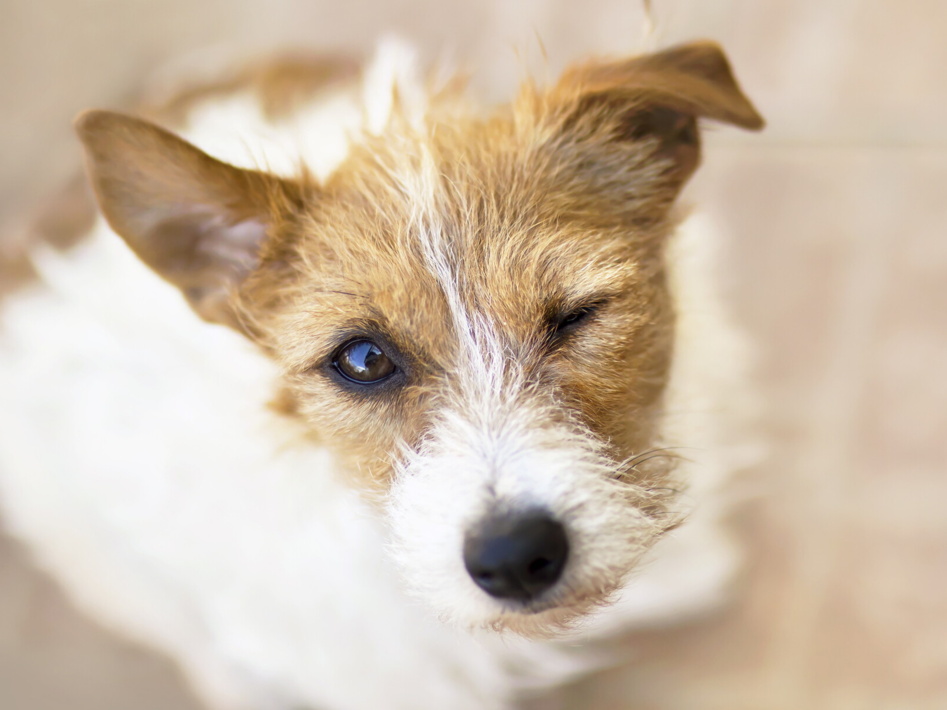

Anyone who has a dog knows just how closely these animals pay attention to us: they follow our movements, understand the tone of our voice and recognise our facial expressions. But new research, published in the scientific journal Royal Society Open Science, has revealed something even more surprising: dogs even notice when we blink, and respond differently depending on who they are looking at.
Researchers at the University of Parma set out to study blinking because it is a particularly unusual behaviour: an ancient, automatic reflex that protects and moistens the eyes, and did not originally evolve as a means of communication. The scientists wondered whether dogs, so sensitive to human signals, could also detect a movement as small and rapid as the blink of an eye. To find out, they recruited 38 dogs (35 of which successfully completed the experiment) and showed them short videos featuring three different people: the dog's owner, an unfamiliar woman and an unfamiliar man.
Each video came in two versions:
- In one, the person blinked every three seconds;
- In the other, the person stared straight at the camera without blinking.
Each dog watched every video for 40 seconds while the researchers recorded each time it blinked. The data showed that the dogs blinked more frequently when watching someone blink than when watching the same person stare without blinking. At first, this might seem like a simple case of automatic imitation. But the most interesting finding was something else: the effect was far stronger when the person on screen was the dog's owner, and was not observed to the same extent with strangers. In other words, it is not just the sight of moving eyelids that matters, but who is on the other side. There was another curious detail: the dogs blinked more frequently when watching female owners than male owners or strangers. The researchers urge caution in interpreting this finding, however, because the study was not specifically designed to determine whether the difference was related to the person's sex or other factors, such as who usually provides most of the dog's care. This naturally raises another question: do dogs blink at exactly the same time as we do, almost as if they were responding to us? The researchers also examined this, checking how often a dog blinked within one and a half seconds of the person on the screen. This happened only around 57% of the time, a proportion that was not statistically different from what would be expected by chance. In other words, dogs are not really "responding" blink for blink, as though taking part in a synchronised conversation. Rather, when watching their owner, they pay closer attention to their eyes and generally blink more often. The study suggests that communication between dogs and humans involves not only obvious signals such as barking, body posture and gaze direction, but also tiny movements, like a blink, that we would normally barely notice. We still do not know exactly what this behaviour means for dogs: it may be linked to attention, relaxation during an interaction, or other aspects of their relationship with their owner. What is clear, though, is that science has once again confirmed just how closely our dogs observe even the smallest gestures we make.