

The alchemical dream of Lord Voldemort comes true
15 May 2025

The alchemists were those somewhat sorcerer scientists who for centuries have tried, in vain, to turn lead into gold. Impossible? Well, at CERN in Geneva they made it.
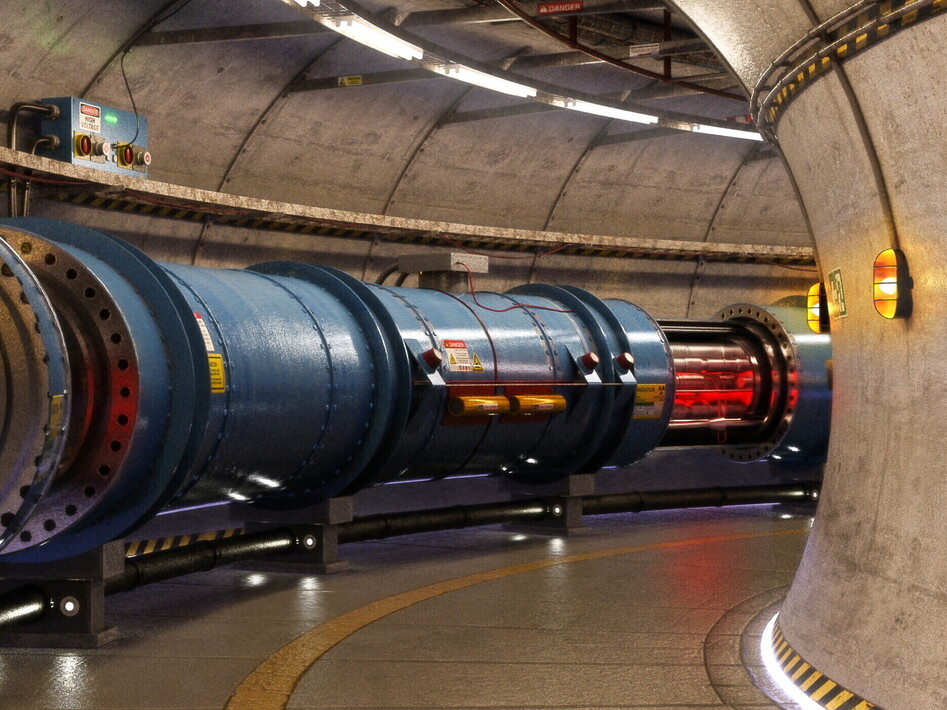
The alchemists also had other ambitious projects, such as, creating the panacea, that is, medicine for all evils, becoming omniscient, that is, knowing everything, preparing the elixir of long life to become immortal and, in fact, transforming the humblest metals into gold with the philosopher’s stone, yes, just that of Harry Potter. Philosopher's stone was both an abstract concept, and an object that some alchemists claimed to possess or to have obtained by treating substances of mineral origin with long and repeated operations and secret formulas. According to some, the philosopher's stone was a pure crystal of red color, it could turn into gold any molten metal in a crucible. The alchemists pursued their magical dream for centuries. They conducted their experiments throughout the Middle Ages until the Renaissance and when with the experimental method proposed by Galileo, modern science was born, alchemy lost the magical and esoteric aspects, changed the name a little bit and became the discipline that today we call chemistry. The modern philosopher's stone is in Geneva, 100 metres underground in the tunnel of CERN's Large Hadron Collider (LHC). CERN, remember, is the European Organization for Nuclear Research, is the world's largest laboratory of particle physics. The particle accelerator is a 27 km long ring of tubes and super magnets. It takes the particles at a speed close to that of light, makes them collide and then detects what happens at the subatomic level. For physicists around the world it is Wonderland. And Alice is, look, the name of the experiment that changed the lead to gold. ALICE, an acronym that stands for (A Large Ion Collider Experiment), produces extreme magnetic fields and for a process called nuclear erosion, has transformed atomic nuclei of lead into nuclei of gold. Okay, but how is that possible? How can one material become another? To answer these questions, we must enter the heart of the atom. In each atom we recognize a nucleus that contains protons positively charged and neutrons without electric charge, so overall it has a positive charge. Around the nucleus rotate the electrons which are much smaller than protons and neutrons and have negative charge. Given that the amount of positive electrical charge of a proton is equal to the amount of negative electric charge of an electron, a neutral atom has an equal number of protons and electrons. Because positive and negative cancel out, right? We know that. All the atoms of the universe are made like this. Why is gold different from lead? The identity of an element, its physical and chemical characteristics, depend on the number of protons contained in the nucleus. For example, in the nucleus of a lead atom there are 82 protons, in that of gold there are 79. This difference of 3 protons makes the difference, huge, between a common metal and of little value and the most precious metal. So, to turn a lead ingot into a gold one, you just need to remove three protons from the core of each lead atom. Could the same technique turn a piece of coal into gold? Certainly. In the carbon core, the atom that makes up about 20% of our body is 6 protons. Here, adding an adequate number, what is missing, we could turn an ember into a nice pendant. And why don't you do it then? Why don't we turn everything we want into gold and become rich broken?
Because we need a huge amount of energy, the one that is around black holes, in supernovae, that is, in the stars that burst, in short, such an amount of energy would make the process decidedly uneconomical. All the atoms of the universe originated in space, during very powerful and catastrophic events. All the hydrogen atoms we have in our body were produced during the Big Bang, they are as old as the universe itself. Our carbon, nitrogen and oxygen atoms were generated in the heart of the stars. According to research, part of the heavy elements we find on our planet, including gold, comes from the collision between two neutron stars that occurred 1000 light-years away 4.6 billion years ago. Alone, that event is responsible for the creation of 0.3 percent of elements such as lead, gold, uranium and iodine. Even the iodine that is part of our body comes from there. The matter deposited by that collision is everywhere. Each human being has in itself an amount equal to an eyelash, especially in the form of iodine; a gold wedding ring contains ten milligrams, a Tesla Model car 3 five grams, a 200 kilogram nuclear reactor. Of all the gold never refined by humans, 600 tons derive from that single event. At the heart of the LHC, lead atoms travel at speeds close to that of light. When two of these nuclei pass very close to each other, but without colliding head-on, their electrical charges generate a very intense electromagnetic field, capable of breaking the nuclei themselves. When the two lead nuclei touch the speed of light, the electromagnetic fields can tear precisely those three protons. In this way the lead from 82 goes to 79 protons, that is, it has become gold. Just what the alchemists dreamed of. All right, but how much gold did they produce at CERN? The researchers estimate that during the process, about 2.9 × 10⁻¹¹ grams of gold were produced in all: less than one billionth of a gram. A trifle, in short, does not become rich also because to push the atoms of lead almost at the speed of light, the particle accelerator has used a lot of energy. It is not only a problem of costs, the transformation of lead into gold is very important only from a scientific point of view because the atoms produced are often radioactive and last little. The gold of CERN is precious not for its subject, but for the knowledge it gives us. Just as the centuries-old work of alchemists was. The repeated attempts, in the vain search for the philosopher’s stone, did not lead to eternal life, to the care of all evil or even to the transformation of lead into gold but they bequeathed something far more important: a great deal of knowing a knowledge that proved to be true wealth. Among the alchemists, in fact, there are also the important names of philosophers and scientists who have made an eternal contribution, yes, to the knowledge of humanity. Isaac Newton devoted much more time to the study of alchemy. Then Roger Bacon, philosopher of science, St. Thomas Aquinas, Marsilio Ficino, Giordano Bruno, Giambattista della Porta, Thomas Browne. And then artists like Parmigianino.