


A new predatory dinosaur discovered in the Sahara
13 April 2026
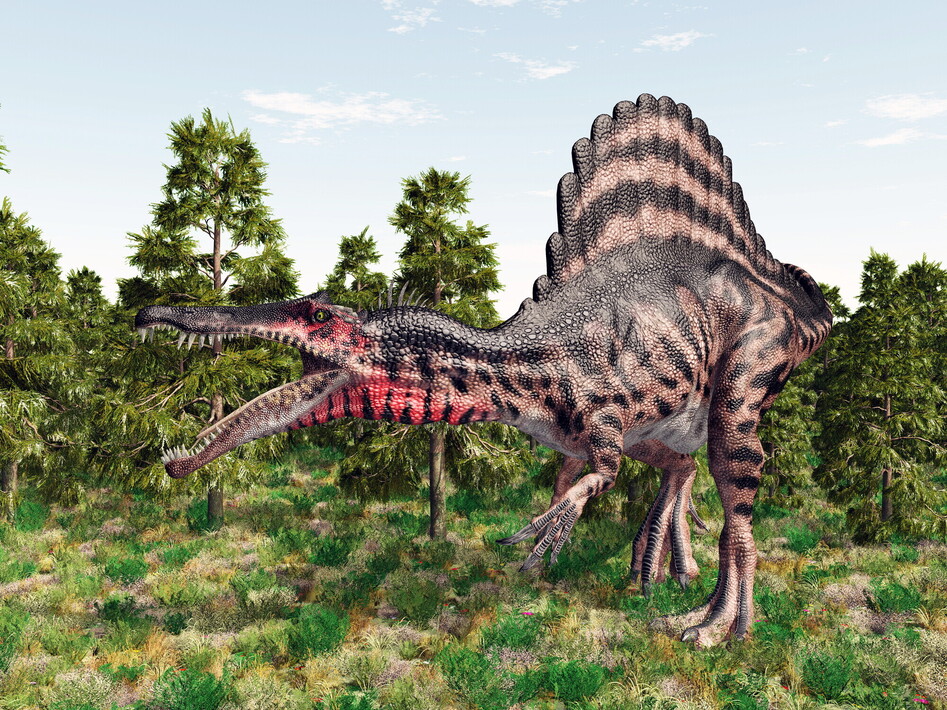

Scientists have discovered a new species of predatory dinosaur called Spinosaurus mirabilis. This enormous animal lived around 95 million years ago, during the Cretaceous period, in a region that is now part of the Sahara Desert but was then a landscape rich in rivers, lagoons and forests.
The discovery was made by an international team of palaeontologists who analysed fossil remains found in Niger. Thanks to modern technologies such as CT scanning and 3D digital modelling, the researchers were able to reconstruct the appearance and lifestyle of this extraordinary dinosaur. Spinosaurus mirabilis belonged to the spinosaurid family, a group of carnivorous dinosaurs known for their long snouts and sharp teeth, similar to those of crocodiles. The new dinosaur could reach a length of more than 10 metres and had a body adapted for hunting. One of its most striking features was the large scimitar-shaped bony crest on its head. Scientists believe that this crest was covered in keratin, the same material found in nails and birds’ beaks and may also have been brightly coloured. It was probably used to communicate with other members of the same species, for example during courtship or to display strength. Unlike many other predatory dinosaurs, Spinosaurus mirabilis lived in a semi-aquatic environment. This means it spent part of its time on land and part in the water. Its physical features suggest that it was highly skilled at moving through rivers and swampy areas. Its long snout and conical teeth were perfectly suited to catching large fish. According to palaeontologists, this dinosaur behaved rather like an enormous heron: it moved slowly through shallow water and then struck its prey with great speed. Some researchers have even nicknamed it the “hell heron” because of its appearance and hunting style. The discovery of this species is especially important because it helps scientists better understand the diversity of spinosaurids and the way they lived. The fact that the fossils were found far from the coast suggests that these dinosaurs did not live only near the sea, but also along large rivers deep within the continents. This discovery shows that, millions of years ago, the Earth was inhabited by creatures that were extremely diverse and perfectly adapted to their environments. Every new fossil allows scientists to reconstruct another piece of the history of life on our planet and provides further details about the Sahara’s swampy past.