


Napoleon’s invisible enemy
1 January 2026
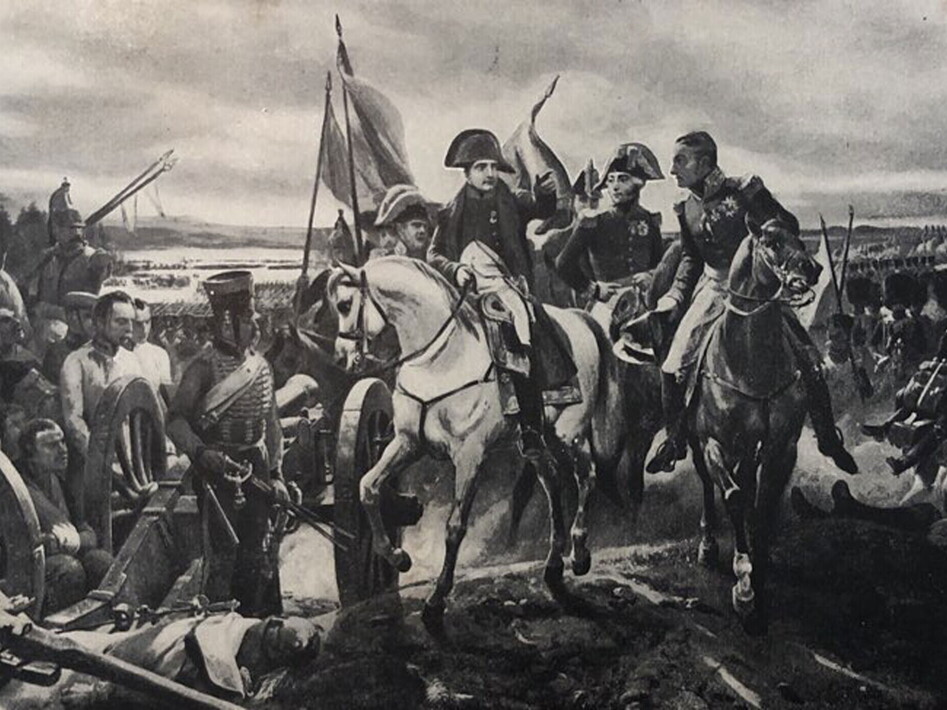

December 1812. Snow is falling thick over the roads around Vilnius, in Lithuania. A cutting wind strips away the last strength of what, just a few months earlier, had been the most powerful army in Europe: Napoleon Bonaparte’s Grande Armée.
Of the 600,000 men who had set off for Moscow, only a few thousand remain. Emaciated, feverish, starving. There is no glory left, no discipline. Only bodies falling into the snow, and no one strong enough to bury them. For two centuries, historians have told us that Napoleon’s army was destroyed by cold, hunger and impossible logistics. How could such a vast army be fed and housed in a place so remote, freezing and inhospitable? It couldn’t. A fatal miscalculation by the great commander. But today, thanks to genetics, we know the truth was more complex – and perhaps even more disturbing. Among the Emperor’s enemies were invisible beings that were completely unknown at the time. In the summer of 1812, Napoleon crossed the River Niemen to invade Russia. He wanted to force Tsar Alexander I to respect the Continental Blockade against Britain and to reduce Russia to a secondary power in Europe, removing a potential threat. At first, the army advanced like a perfectly oiled machine, but cracks soon began to appear in what had seemed an impeccable plan. The distances to be covered were immense, food supplies were running low, and the horses were dying of exhaustion. When the troops reached Moscow, they found the city deserted and in flames. There was nothing for it but to retreat, under a relentless snowstorm. That was the beginning of the end: cold, hunger, desertions… and above all, mysterious diseases. Doctors and officers spoke of very high fevers, diarrhoea, delirium, rashes on the skin. At the time they talked about typhus and dysentery, but no one could know for sure what was really afflicting the soldiers. Two centuries later, a research team led by Rémi Barbieri and Nicolás Rascovan at the Institut Pasteur in Paris revisited the mystery using the tools of modern science. Their findings were recently published in the journal PLOS One. Archaeologists recovered thirteen perfectly preserved teeth from the soil beneath Vilnius, where in 2002 a mass grave containing over three thousand skeletons of Napoleonic soldiers had been discovered. Inside those teeth – protected by the enamel – traces of the soldiers’ DNA are still preserved. Researchers extracted that material and sequenced it using palaeogenomic techniques – an approach that combines biology, computer science and archaeology to identify genetic material found in ancient remains. The result was startling. Among the fragments of human DNA, they detected two deadly bacteria: Salmonella enterica Paratyphi and Borrelia recurrentis. Deadly, because they cause two equally terrible diseases. Two invisible enemies that, in 1812, devastated the Grande Armée. Salmonella Paratyphi causes paratyphoid fever, a severe intestinal disease, similar to typhoid, transmitted through water or food contaminated by infected faeces. Symptoms include high fever, headache, diarrhoea, vomiting, abdominal pain and jaundice. In an army exhausted, starving and without access to safe drinking water, paratyphoid fever was a mortal blow. Borrelia recurrentis, on the other hand, is a bacterium transmitted by lice. It causes relapsing fever: sudden episodes of very high temperature, sweating and delirium, followed by a temporary lull… and then another fever spike. A debilitating disease, perfectly suited to breaking down organisms that are already at the limits of their strength. Together, these infections could turn a camp into a living hell. Soldiers suffered, collapsed and died one after another. And with them, Napoleon’s imperial dream died as well. For the first time, palaeogenomics has provided direct evidence that paratyphoid fever and relapsing fever contributed to the collapse of the Grande Armée. And this discovery goes far beyond historical curiosity. It shows us how major strategic decisions can be overturned by forces we cannot see. Tiny organisms have always played a role in human history. From the Plague of Athens to the 1918 Spanish flu, and up to Covid, diseases have helped determine the fate of empires, armies, economies and peoples.