


Coral reefs in danger
13 January 2026
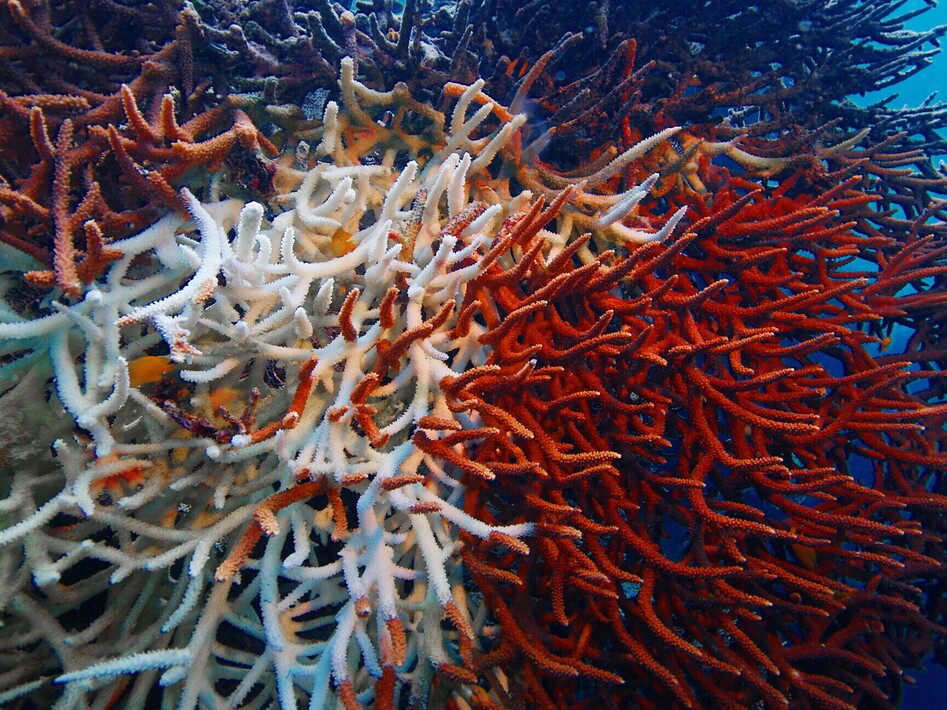

2026 could become a dramatic year for coral reefs around the world. After decades of stress caused by ocean warming, some scientists fear that this could be the moment when the world’s major coral ecosystems reach a point of no return.
Coral reefs, which cover less than one per cent of the ocean floor but support around a quarter of all marine species, are extremely vulnerable to changes in water temperature and to the impacts of climate change. In recent years, extreme events such as marine heatwaves have driven many reefs to undergo mass bleaching and mortality, to the point that scientists are now looking at this year with growing concern. When the water becomes too warm, corals expel the microscopic algae living within their cells, which provide much of their nourishment as well as their characteristic bright colours. Without these algae, the coral turns white in a process known as bleaching. If high temperatures persist, the coral can become severely weakened and die. This phenomenon is not rare; in recent years there have been several global bleaching events, and the most recent has been the most extensive ever recorded, with more than 80 per cent of the world’s coral reefs affected by heat stress over the past two years. Scientists now fear that some of these extreme events are occurring too frequently, and that natural recovery times between one heatwave and the next are too short. In the past, a natural climate phenomenon called El Niño could temporarily raise ocean temperatures, followed by a cooler phase known as La Niña, which allowed ecosystems to recover. However, with global warming underway, El Niño events are becoming more intense and more frequent, while cooling periods are shorter and less effective. This acceleration could mean that coral reefs no longer have enough time to recover between one episode of stress and the next, increasing the risk of large-scale collapse. When an ecosystem reaches a climatic tipping point, as experts call it, this means it has crossed a threshold beyond which returning to its previous state becomes extremely difficult, if not impossible. In the case of coral reefs, in addition to the impacts of extreme thermal conditions, other factors worsen the situation, such as ocean acidification, caused by the absorption of carbon dioxide from the atmosphere, and excessive pollution, which further weakens the health of corals and their ability to regenerate. The collapse of coral reefs would not be an isolated loss. These ecosystems provide shelter, food and habitat for an extraordinary variety of marine species, contributing enormously to ocean biodiversity. Millions of people in various parts of the world depend on coral reefs for fishing, tourism and coastal protection from extreme weather events such as storms, because these natural structures absorb wave energy and reduce coastal erosion. Over the past decades, live coral cover on reefs has declined dramatically. Compared with conditions in the 1950s, it is now estimated that about half of all reefs have been lost or are severely degraded. Scientific projections indicate that if global warming reaches an average increase of 1.5 degrees Celsius above pre-industrial levels, between 70 and 90 per cent of corals could disappear. Even if further temperature rises were limited, many reefs would still suffer from the impacts already underway. Yet not everything is hopeless. Some reefs, especially those in deeper waters or in regions where temperatures are less extreme, have shown a degree of natural resilience and adaptive capacity. Research projects and conservation initiatives are under way to promote coral recovery and protect the most vulnerable areas. These include strategies to reduce local pollution, improve fisheries management and even select coral varieties that are more resistant to high temperatures. Despite these efforts, it remains clear that the fate of coral reefs is closely tied to the actions humanity takes to combat climate change. Reducing greenhouse-gas emissions, protecting the oceans and promoting sustainable management of marine resources are crucial measures if we want to give coral reefs a chance of surviving in the decades ahead. Whether 2026 will truly be the year when many of these structures reach a point of no return will largely depend on the choices made today to limit the rise in global temperatures and safeguard these treasures of the sea for future generations.